How Binance Copy Trading Works and How to Pick a Lead Trader
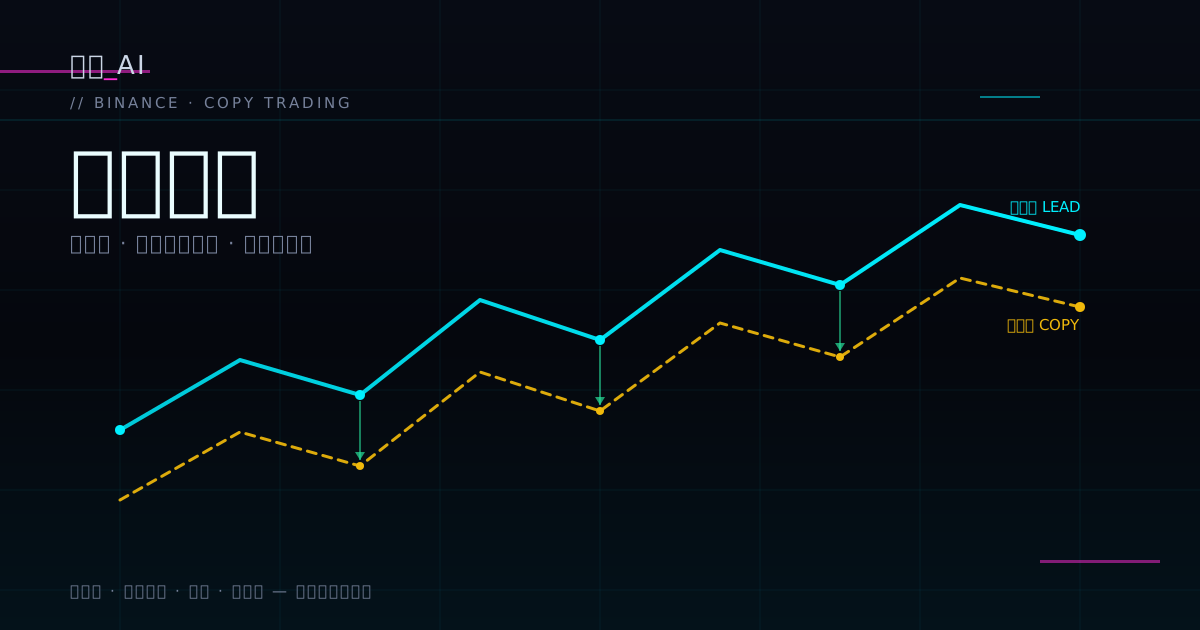
You've almost certainly scrolled past the pitch: no technical knowledge needed, no screen-watching, one tap to copy an expert's trades and earn alongside them. That's Binance Copy Trading. It does genuinely lower the bar — the hardest parts, timing and order placement, get handed to a lead trader you choose, and whatever he opens and closes, your account follows in proportion. But a low bar is not the same as low risk: the hard part of copy trading isn't "how do I turn it on," it's "who am I following" — because what you copy across might be the returns, and might be the risk. This piece goes in the order beginners actually trip over: what copy trading is, how the profit share is calculated, how to choose a person, and where it goes wrong.
What copy trading actually is
Copy Trading is Binance's automatic trade replication feature. You select a lead trader, and from then on, every position he opens and closes is mirrored into your account in the same direction at whatever proportion you set — you don't watch the market and you don't make the call; whatever he does, you do. It comes in two forms: futures copy trading replicates leveraged futures positions, with the multiplier and the risk both scaled up, while spot copy trading replicates spot buys and sells, with no leverage and no forced liquidation, which is a gentler ride.
Strictly speaking copy trading isn't "AI" — what it copies is the judgement of a real person, not an algorithmic signal. But like grids and bots, it's one of the Binance tools that saves you the manual work, sitting somewhere between a fully automatic bot and pure hand trading. To see where it fits among Binance's tools as a whole, go back to The Full Guide to Binance AI & Smart Tools; to understand how it differs from grids and DCA, read the side-by-side in How to Use Trading Bots.
Two roles: the lead trader and you, and how the profit share works
There are only two kinds of people in this arrangement, and once you're clear on what each one is after, you can see how the money flows:
- The lead trader: publishes his own trades for others to copy. His return comes from the P&L of his own positions plus the profit share he takes from copiers, which gives him a motive both to make his record look good and to recruit as many followers as he can.
- The copier (that's you): puts up the money to replicate his trades, carries the P&L, and pays him a profit share for the privilege of saving effort and borrowing an expert's hand.
On cost there are two ledgers to keep. The first is the profit share: Binance typically takes a cut of your net profit for the lead trader, commonly around a tenth, and generally only when you're in profit — but a losing stretch doesn't refund the share you already paid on earlier gains. The second is fees: every copied fill still pays the usual maker/taker fee, which goes to the exchange and is a separate matter from the profit share; the more the lead trader turns over, the more it accumulates. Those two together are your real cost, so don't fix on the leaderboard return. To estimate how much the fees eat and how much the rebate hands back, run it through the Fee / Rebate Calculator. The exact profit-share percentage and fee rates go by what the Binance page shows when you open it.
Picking a lead trader: don't just stare at the return
This is where the time in this piece should go. Whether copy trading makes you money depends heavily on who you followed. The most common beginner mistake is opening the leaderboard and following whoever has the highest return. But return only tells you how much he made; it doesn't tell you how much risk he took, or whether he can keep it up. These matter far more than the return figure:
| What to look at | Why it matters |
|---|---|
| Maximum drawdown | How far the account shrank at its worst. The deeper the drawdown, the more risk he's willing to run — and you may be joining right before his next deep one. |
| Time spent leading | An account that's been running for years beats one that caught fire a few weeks ago. A high return over a short window is very often luck or a single market move. |
| Copiers / assets managed | A steady copier base means people keep following him, which is worth something as a reference but is no guarantee of skill; a base that swings wildly, or one that spikes right after he appears, deserves a second look. |
| Position style and leverage | Check how much leverage he usually runs, how fond he is of big positions, and how long he holds. High leverage and heavy size make for a pretty curve — and a fast wreck. |
The selection rule in one line: look at how ugly his losing stretches are first, and how much he made second. A lead trader with a shallow drawdown, a long run, and a steady style is far more dependable over time than an account that reached the top of the board on a few heavily leveraged gambles — and however pretty a historical curve is, it only describes the past: return does not predict return. For the right expectations about whether automation lets anyone earn while lying down, read this alongside Can Binance Trading Bots Actually Make Money: a tool executes for you, it doesn't remove your risk.
The two copy modes and the parameters that matter
Once you've decided who, you decide how. Binance copy trading generally offers two replication modes:
- Fixed amount: each time the lead trader opens a position, you follow with a fixed sum, until the capital you allocated runs out. The risk per trade is contained and easy to reason about, which suits beginners.
- Proportional: replication tracks a percentage based on the lead trader's position size and your available balance. When he goes heavy, so do you — it hugs him more closely, but the risk scales with his rhythm too.
Beyond the mode, a few parameters have to be set properly. Copy capital: only money you can afford to lose. Per-trade cap: put a ceiling on each individual position, so that a sudden oversized bet on his part doesn't drag you in with it. Stop-loss / maximum loss line: the point at which the whole copy arrangement shuts itself down — the single most important safety rope between you and a stranger. Put plainly, these few parameters are the only insurance you keep hold of when you hand your money to someone else to operate, so don't skip them because they're fiddly.
Step by step: opening a copy position (start on the demo)
No screenshot-by-screenshot walkthrough — the interface changes, so go by what you actually see — but here's what each step is doing:
- Find the copy trading entry. Go into Copy Trading in the Binance app or on the web, and first be clear about whether you want futures or spot copy trading.
- Practise on the demo first. Binance usually offers demo copy trading, letting you run the whole flow on virtual funds. I'd have a beginner spend a few days there, learning how the replication syncs and what a drawdown looks like, before real money.
- Filter the lead traders. Use the criteria from the previous section — maximum drawdown, time leading, size of following, leverage style — rather than sorting by return.
- Choose a mode and set the parameters. Fixed amount or proportional, then the copy capital, the per-trade cap, and the stop-loss line. Err conservative and start small.
- Transfer the funds and confirm. Move enough USDT into the matching account and confirm, and from then on every move the lead trader makes syncs to you.
- Check in regularly, but don't meddle. Copy trading spares you the screen-watching, but you still have to look occasionally at whether his style has shifted and whether the drawdown has gone past what you can carry — and stop the copy decisively when it has.
The mindset fits in one line: treat copy trading as outsourced execution, and keep the risk-control reins in your own hands — the operating can be outsourced, the judgement and the stop-loss cannot. On whether to start with automated tools like this or practise by hand first, see the trade-offs in Smart Strategies vs Manual Trading.
Describing what copy trading feels like helps set sane expectations. Once you're following someone, your account is the shadow of his; when he loses a few in a row and the drawdown digs in, it's very easy to panic-cut or swap leads on impulse, and people usually cut at exactly the wrong moment. The real homework happens before you follow: read his historical drawdown and his style properly, and set the stop-loss line somewhere you can still sleep. Do those two things thoroughly and copy trading is genuinely low-effort.
The traps copy traders fall into most
When copy trading goes wrong, it's almost always one of these:
- Chasing whoever tops the return board: the top spot is usually reached by betting big with high leverage and being right once, and following him in often means arriving exactly when his luck runs out.
- Going all-in behind high-leverage futures: futures copy trading can be liquidated. Put most of your capital behind one high-leverage lead, and when he blows up you get force-closed alongside him, with real money gone.
- No stop-loss, no attention: assuming copy trading means you can walk away entirely, so that when his style shifts or the drawdown deepens there's no floor under the position and the loss just keeps widening.
- Ignoring the profit share and the fees: looking only at the gross return and forgetting that net profit still gets a share taken and every fill still pays a fee, so what lands is regularly a chunk less than imagined.
- Blind trust, then constant switching: panicking into a new lead trader after one bad stretch, hopping between people, and turning copy trading into just another form of emotional trading.
Invert each of those — pick someone with a controlled drawdown, control risk with small size and a stop-loss, count the profit share and fees as cost, and give whoever you pick enough time — and copy trading is unlikely to hurt you badly. These are also the general failure modes for beginners using any of Binance's tools; to sidestep them systematically, see 7 Common Traps for Beginners Using Binance AI.
FAQ
Can Binance copy trading make money reliably?
No. Copy trading only replicates a lead trader's moves into your account in proportion: he earns and you earn with him, he loses and you lose with him, and past returns say nothing about the future. A lead trader can change style at any time, fail to hold up under a drawdown, or get liquidated outright, and your principal carries the same risk. Treat it as a low-effort way to take part, not as a way to earn for certain.
Does copy trading cost anything extra?
There are two things to count. First, the profit share paid to the lead trader, usually around a tenth of your net profit, taken only when you make money and not when you lose. Second, ordinary trading fees: every fill still pays the usual maker or taker fee. The exact percentages go by what the Binance page shows when you open it. Don't fix on the headline return alone; fold the profit share and the fees into your cost.
What is the most reliable way to pick a lead trader?
Don't go by the return leaderboard alone. Look hard at how deep the maximum drawdown runs, whether they have been leading long enough, whether the copier count and assets under management are steady, and how heavy their positions and leverage tend to be. An account that climbed the board on a few heavily leveraged gambles is far less reliable than one with a controlled drawdown, a long track record, and a consistent style. Look at how ugly their losing stretches are first, and at how much they made second.
Can copy trading get liquidated?
Futures copy trading can. It carries leverage, and if the lead trader is liquidated, or a violent move eats through your margin, your copied position gets force-closed the same way and the money lost is your own. Spot copy trading has no leverage and no forced liquidation, so the risk is relatively smaller. If you want a first taste as a beginner, start on the demo or with spot copy trading rather than going in fully allocated behind a high-leverage futures lead.
Wrap-up and next steps
To close it out. Copy trading pushes the barrier to entry very low, letting you replicate an expert's trades without understanding the technicals — but what comes across is the risk as much as the return, and a low bar has never meant low risk. Two things decide how it goes: following the right person (drawdown, track record, style — not just the return figure) and managing your own position (small size, a per-trade cap, and a stop-loss line, none of them optional). The first takes homework, the second takes discipline, and missing either is how copy trading goes wrong.
For what to read next, I'd pick these:
- To place copy trading within Binance's full set of tools, go back to The Full Guide to Binance AI & Smart Tools.
- For a clear-eyed expectation of whether automation earns while you sleep, see Can Binance Trading Bots Actually Make Money.
- If you're torn between automated tools like this and practising by hand, see Smart Strategies vs Manual Trading.
As a socially driven way of investing, copy trading has its own introductory explainers at Binance Academy that are worth reading alongside this; for the specifics of which modes Binance copy trading supports, how the profit share and parameters are set, and whatever the latest rules are, go by what you see on the Binance page and in the Help Center (checked 2026-07).